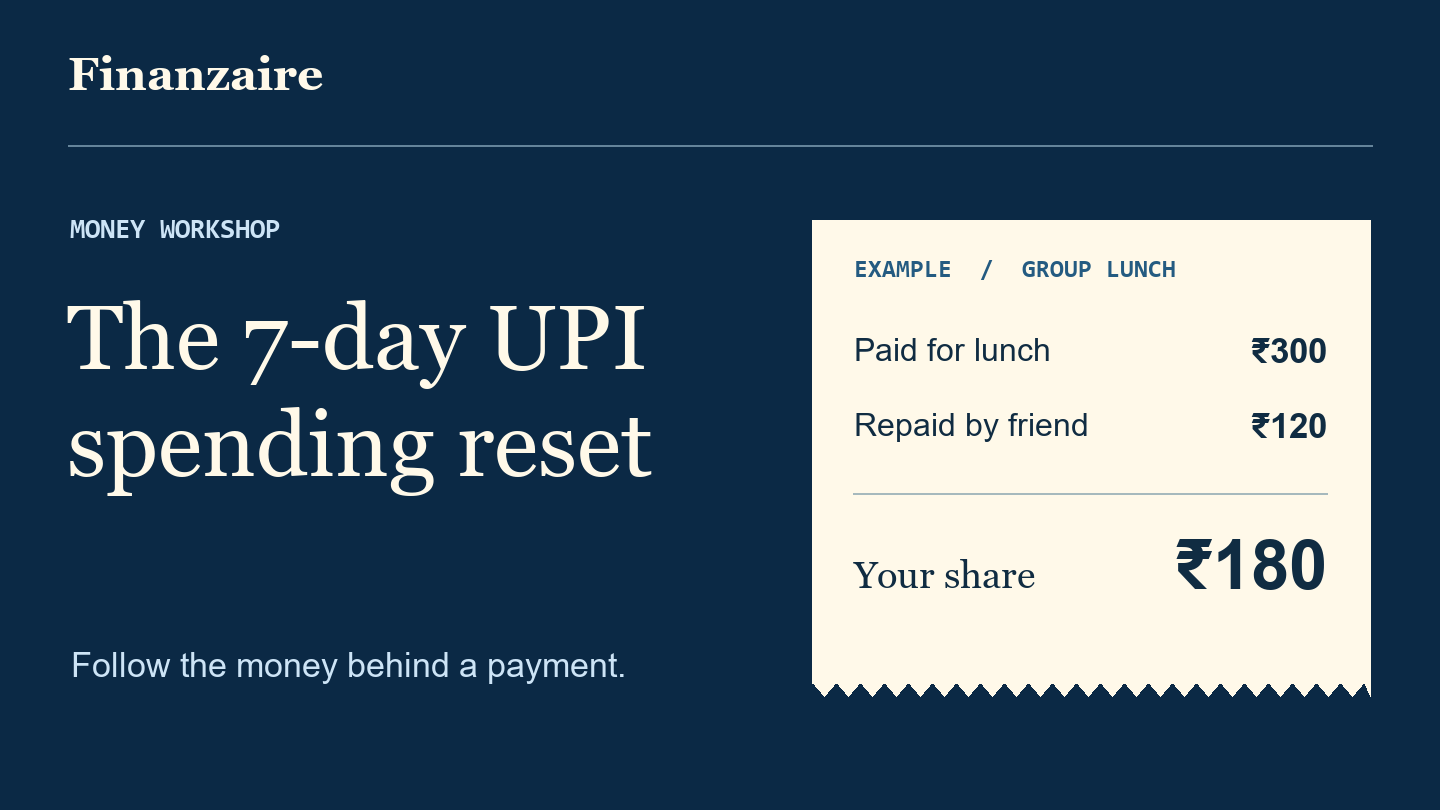
You pay ₹300 for lunch. A friend sends back ₹120. Later you move ₹500 to your other bank account. Your UPI history shows ₹800 sent. How much of it paid for your own lunch?
Check your answer
₹180. You still own the ₹500. Your friend covered ₹120 of the ₹300 meal. Counting every debit as spending would make an ordinary lunch look more than four times as expensive.
Try the same exercise with seven consecutive days from your own history. Pick a week that has already ended so you can finish in one sitting. The result is your personal spending through UPI for those dates. Cash and purchases made directly by card belong in a separate total.
Read the history like a receipt
- Mark purchases and shared bills. Start with successful payments for things you used, including the full bill when you paid for a group. If you sent a friend your share of dinner, that is a purchase too.
- Mark money you still own. Include transfers between your own accounts in the first box and repeat them in the second. For UPI Lite, count the individual purchases and leave the top-up out of both boxes. A wallet top-up and the later purchase can otherwise count the same money twice.
- Pair each repayment with its purchase. Deduct only money actually returned for an included purchase. If a refund arrived this Friday for last week’s shoes, update the day you bought the shoes. An unrelated credit, salary or promised repayment does not reduce this week’s spending.
Leave pending or failed payments, investments, loans, refundable deposits and credit-card bill settlements outside this exercise. If a payment is unclear, set it aside and check the final status or bank statement before you finish. With several UPI apps, use one record per transaction.
Try your own week
Work through any seven consecutive dates, oldest first. Enter rupees for one day at a time. A zero is a valid entry. Entries stay on this page until you refresh or leave. Copy your final figure before closing.
0 of 7 days reviewed
What will you do differently next week?
Find one payment you would happily repeat, then one you barely remember. A ₹60 bus ride can matter more to you than a ₹250 convenience order. The numbers tell you where to look. You decide what was worth it.
Pick one small experiment you can check in seven days. For example, “I’ll collect my share of Friday lunch before I close the week,” or “I’ll bring coffee on two mornings and see whether I miss buying it.” If you find nothing you want to change, keep the baseline and compare another ordinary week.
Prefer a paper ledger?
Draw seven rows, one per date. Give each row four columns: purchases plus own transfers, own transfers, matched money back, and personal spend. Subtract the middle two amounts from the first. Write an explicit zero on a reviewed day with no purchases. A blank row means you haven’t checked it yet.
How to find your records: NPCI’s UPI frequently asked questions explain where to view transaction history. The lunch receipt is a fictional example. The tracker uses your selections, and connects to no bank account.